
Discovering structural damage can be concerning for any property owner. Whethercaused by age, water intrusion, corrosion, earthquakes, fire, settlement, or impact, thefirst question is often the same: Can the structure be repaired, or does it need to bereplaced?
The answer depends on a comprehensive engineering evaluation. Engineers assess theextent of the damage, identify its underlying cause, and determine whether repairs cansafely restore the structure’s performance. In many cases, damaged structures can besuccessfully rehabilitated, provided the deterioration has not progressed beyondpractical repair.
The First Step Is a Structural Condition Assessment
Before recommending any repairs, engineers perform a detailed condition assessmentto understand the overall health of the structure.
The evaluation typically includes:
- Visual observations
- Documentation of cracks and deterioration
- Review of available construction drawings
- Assessment of previous repairs
- Evaluation of structural framing
- Identification of moisture intrusion
- Review of loading conditions
The objective is to determine not only what is damaged, but also why the damageoccurred.


- Evaluating the Cause of the Damage
Structural damage often occurs due to an underlying cause. Repairing visibledeterioration without addressing the source often results in recurring problems.
Engineers commonly investigate damage caused by:
- Water intrusion
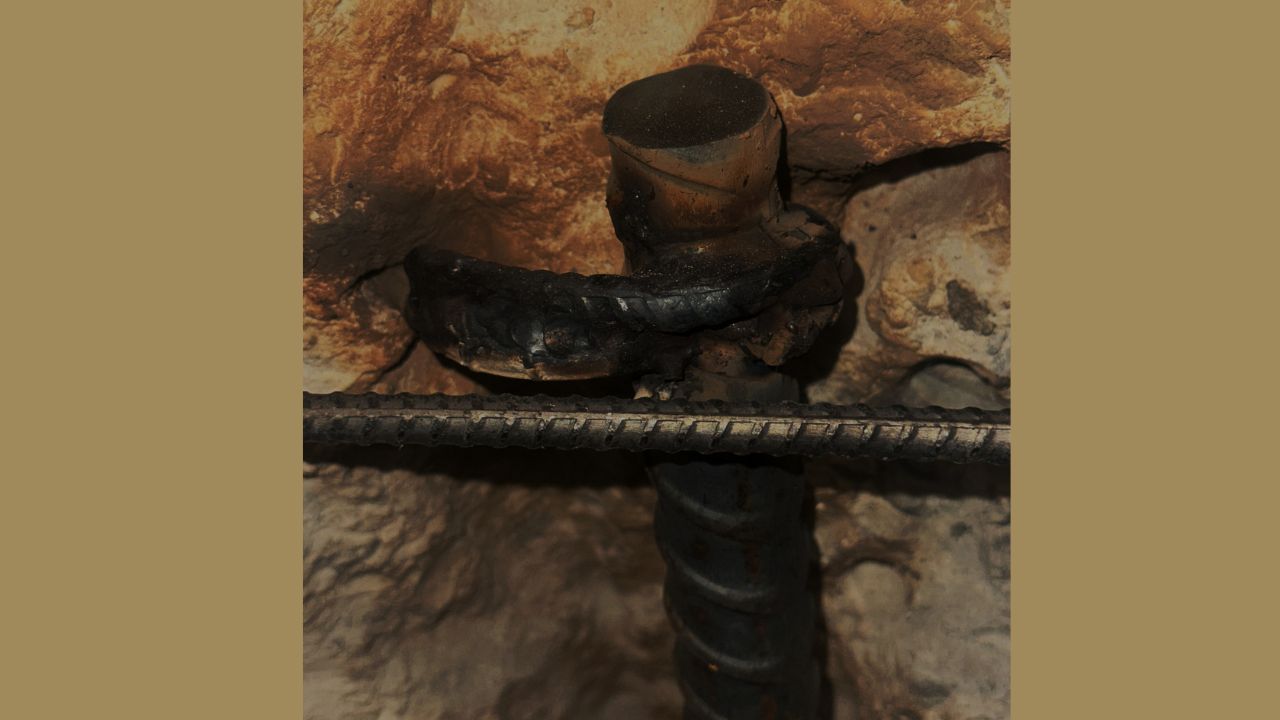
- Reinforcing steel corrosion
- Foundation settlement
- Earthquake effects
- Fire exposure
- Impact damage
- Construction deficiencies
- Long-term weathering
- Poor drainage
- Deferred maintenance
Identifying the root cause is one of the most important steps in developing an effectiverepair strategy.
- Assessing the Extent of Deterioration
Not all damage affects a structure’s overall stability. Engineers determine whether thedeterioration is localized or widespread and whether the structural system can continueto perform safely after repairs.
Typical areas of evaluation include:
- Concrete deterioration
- Wood decay
- Structural steel corrosion
- Beam and column condition
- Connection integrity
- Foundation performance
- Balcony framing
- Roof framing
- Waterproofing failures
The severity and distribution of the damage influence the recommended repairapproach.
- Material Testing and Structural Investigation
Many structural conditions cannot be fully evaluated through a visual inspection alone.Additional testing may be recommended to better understand the condition ofconcealed materials.
Depending on the project, engineers may perform:
- Concrete coring
- Reinforcing steel location
- Ground Penetrating Radar (GPR)
- Half-cell potential testing
- Ultrasonic Pulse Velocity (UPV)
- Exploratory openings
- Moisture testing
- Material sampling
- Laboratory testing
These investigations provide valuable information about the existing structure and helpengineers develop appropriate repair recommendations.
-
Can the Structure Safely Carry
Its Loads?
One of the primary objectives of the evaluation is determining whether the structure cansafely support its intended loads after repairs are completed.
Engineers consider:
- Structural capacity
- Existing loading
- Building use
- Code requirements
- Future occupancy
- Serviceability
- Long-term durability
If the structure can be restored to an acceptable level of performance through repairs,rehabilitation is often a practical and cost-effective option.
Repair or Replacement?
Replacement is not always necessary. Manystructures with localized deterioration can besuccessfully repaired while preserving most ofthe existing building.
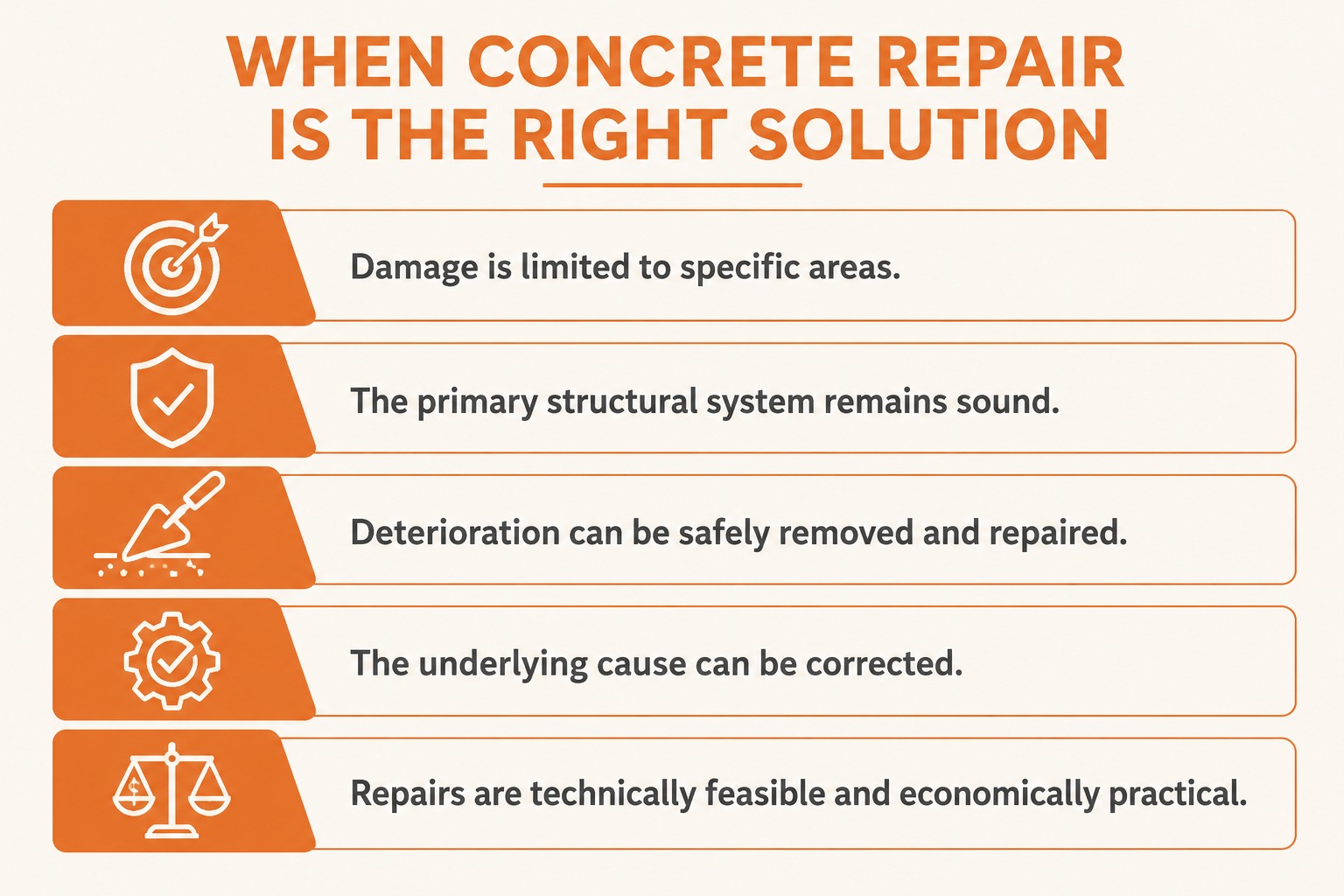
Repairs are often appropriate when:
- Damage is limited to specific areas.
- The primary structural system remains sound.
- Deterioration can be safely removed and repaired.
- The underlying cause can be corrected.
- Repairs are technically feasible and economically practical.
Complete replacement may be considered whendeterioration is widespread, structural capacitycannot be restored economically, or the buildingno longer meets the owner’s long-term needs.
Developing a Repair Plan
Once the evaluation is complete, engineers prepare repair recommendations based onthe observed conditions.
Depending on the project, repairs may include:
- Concrete restoration
- Structural strengthening
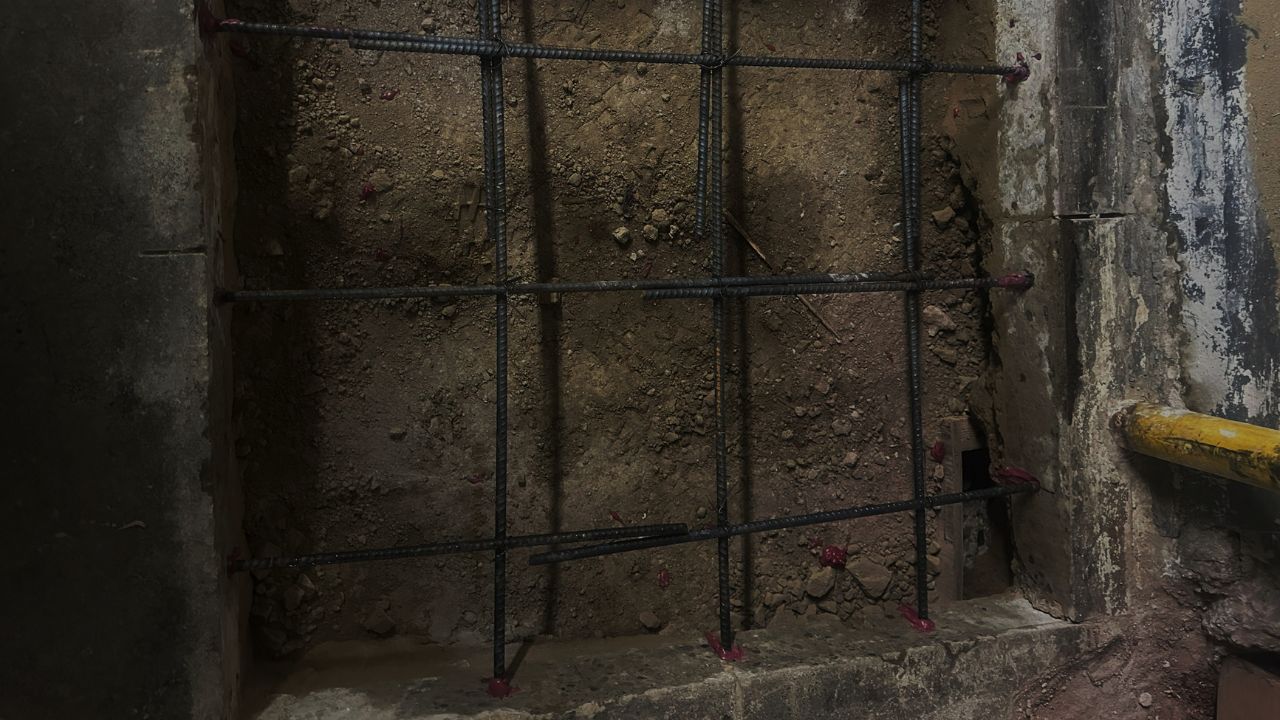
- Reinforcing steel repair
- Balcony rehabilitation
- Waterproofing replacement
- Structural wood replacement
- Foundation repairs
- Carbon fiber strengthening
- Corrosion mitigation
- Drainage improvements
A properly designed repair program restores structural performance while addressingthe conditions that caused the deterioration.
Why Professional Evaluation Is Important
Every damaged structure is unique. Similar-looking cracks or deterioration can have verydifferent underlying causes and may require completely different repair strategies.
Professional evaluations provide property owners with reliable information about thecondition of their buildings, allowing informed decisions about repairs, budgeting, andlong-term maintenance. Early investigation often reduces repair costs by identifyingproblems before deterioration becomes more extensive.
Conclusion
Determining whether a structure can be repaired requires more than a visual inspection.Engineers evaluate the cause, extent, and severity of the damage, perform materialtesting when necessary, and assess whether the structure can safely meet its intendedperformance after repairs.
In many cases, timely structural rehabilitation offers a practical alternative toreplacement, preserving the value of the property while improving safety and extendingits service life. A comprehensive engineering evaluation is the first step toward selectingthe most appropriate repair solution.
Get a Quote
If your building has experienced structural damage, water intrusion, concrete deterioration, or signs of aging, SME Engineering & Construction can help evaluate the condition and perform the necessary repairs. Our experienced team specializes in structural rehabilitation, concrete restoration, waterproofing, balcony repairs, and building rehabilitation for commercial, multifamily, and institutional properties throughout California.
From localized structural repairs to comprehensive rehabilitation projects, we work closely with engineers, property owners, and property managers to deliver durable, code-compliant solutions that extend the service life of existing structures.
Contact SME Engineering & Construction today to schedule a consultation and receive a detailed proposal for your structural repair project.
Visit: https://smeconstruct.com/