
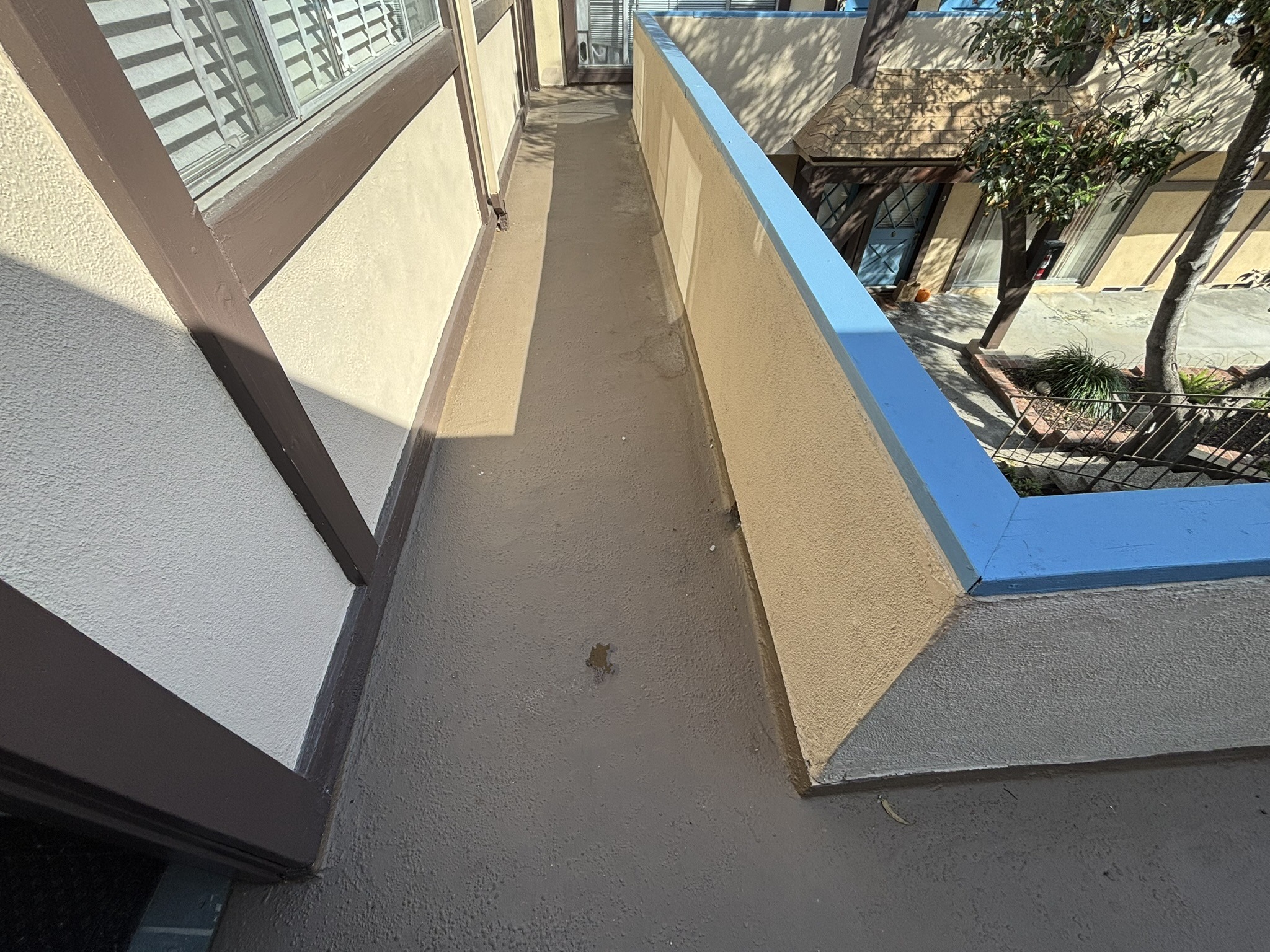
Balconies, exterior walkways, and roof decks take a beating. Sun, rain, foot traffic, and seasonal movement slowly wear down the surface that keeps water out, and once that surface fails, moisture can reach the plywood and wood framing underneath. In Southern California, where many apartment and condominium buildings rely on wood-framed elevated decks, a failed deck coating can turn into dry rot, damaged stucco, and costly structural repairs.
Simply painting over a worn deck does not solve the problem. A durable repair needs a complete, engineered waterproofing system that is installed over a sound substrate with proper flashing, drainage, and detailing.
That is why SME Engineering and Construction uses the Pli-Dek waterproof deck system.
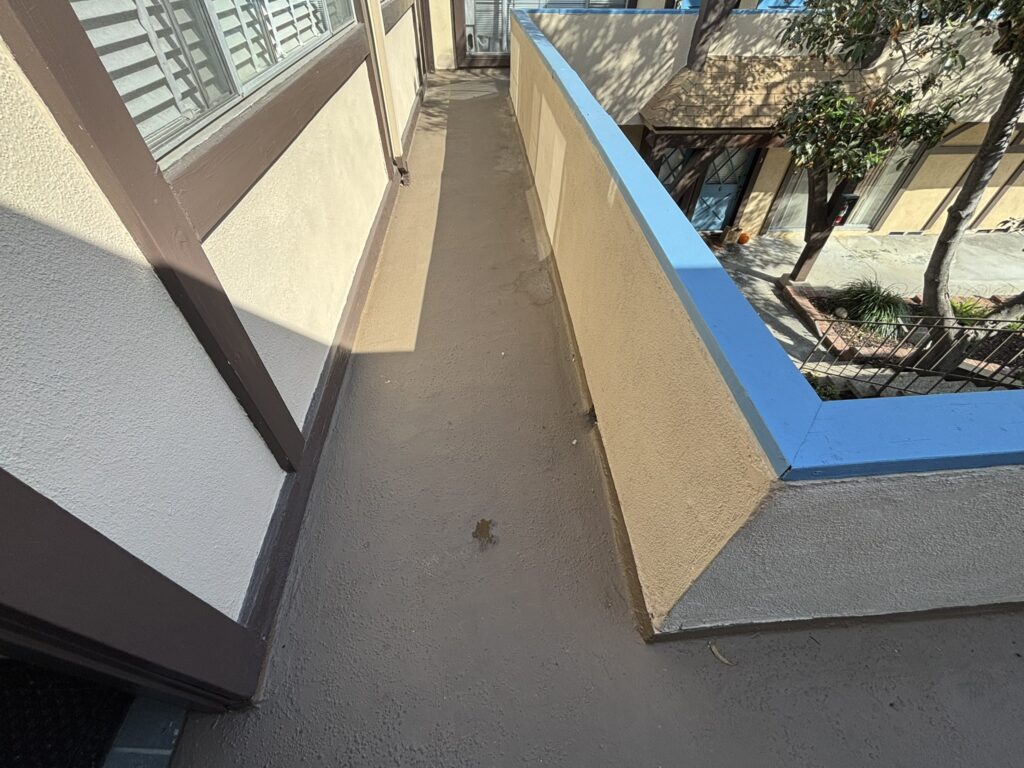
Pli-Dek is a polymer-modified, cementitious deck coating designed for walking decks over plywood. It is built up in layers over galvanized metal lath, creating a hard, slip-resistant, fire-rated surface that protects the structure below. The Pli-Dek system for plywood substrates has been evaluated by ICC-ES since 1980 and is recognized by the City of Los Angeles.
In this article, we walk through why deck waterproofing matters, each step of the Pli-Dek installation process, where the system is used, and what to consider before you waterproof a balcony, deck, or walkway.
Why Do Balconies and Decks Need Waterproofing?
Most elevated decks look fine on the surface until water has already found its way inside. By the time a stain appears on a ceiling or stucco starts to bubble, the damage below the coating may be well underway.
Several situations commonly lead property owners to waterproof or re-coat a deck.
- Water Intrusion and Wood Rot
Cracks, worn spots, and failed seams in a deck coating allow water to soak into the plywood sheathing and the joists below.
Over time, trapped moisture can cause dry rot, fungal decay, and corrosion of fasteners and connectors.
Waterproofing protects the framing that actually supports the balcony.
- Aging or Failed Deck Coatings
Every deck coating has a service life. Sun exposure, foot traffic, furniture, and building movement gradually wear the surface down.
Peeling, chalking, hairline cracking, and soft or hollow-sounding areas are common signs that a coating is nearing the end of its life.
Re-coating at the right time is far less expensive than replacing rotted framing.
- Balcony Safety and Inspections
California’s balcony inspection laws, SB 721 for apartment buildings and SB 326 for condominium associations, require periodic inspections of balconies, decks, and other elevated exterior elements.
When an inspection finds a failed coating or water damage, repairs and new waterproofing are often required.
A properly installed system helps keep these elements safe and in good condition between inspections.
- Fire Rating and Code Compliance
Decks over living space, walkways, and exit paths must meet building code requirements for fire resistance and durability.
Pli-Dek systems carry Class A and one-hour fire ratings when installed as specified.
Using an evaluated, code-recognized system makes permitting and inspections more straightforward.
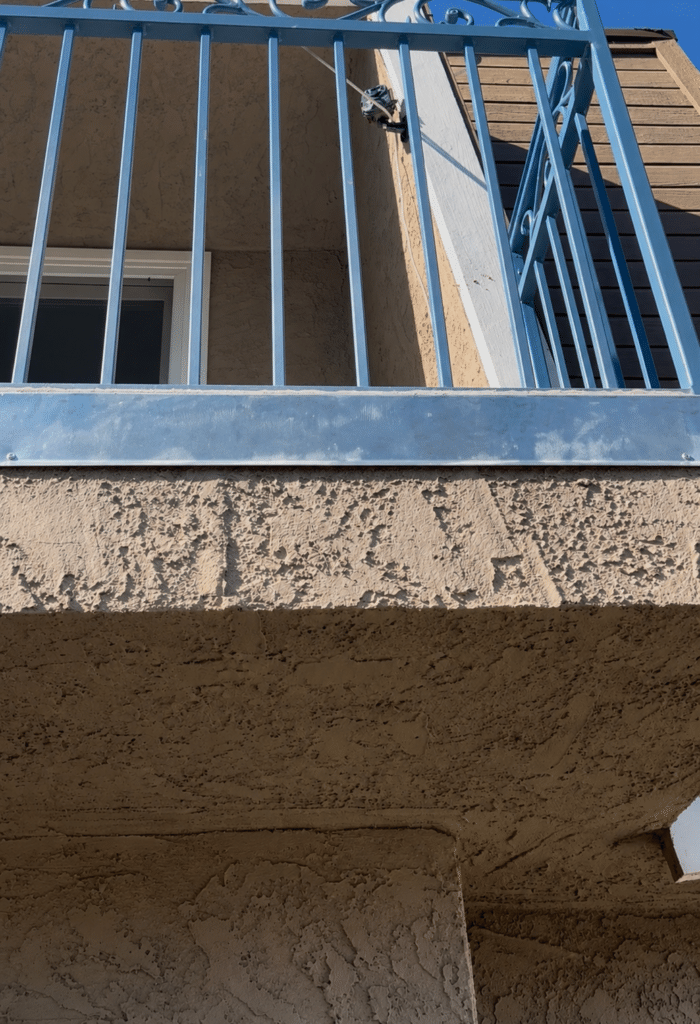
How Does the Pli-Dek Waterproofing System Work?
A Pli-Dek deck is not a single coat of paint. It is a layered system, and each layer has a job. Proper preparation, flashing, curing time between coats, and quality control are what make the finished deck watertight and long-lasting.
Here is how a typical Pli-Dek waterproofing project on a plywood balcony or walkway comes together.
- Step 1: Inspection and Removal of the Failed Coating
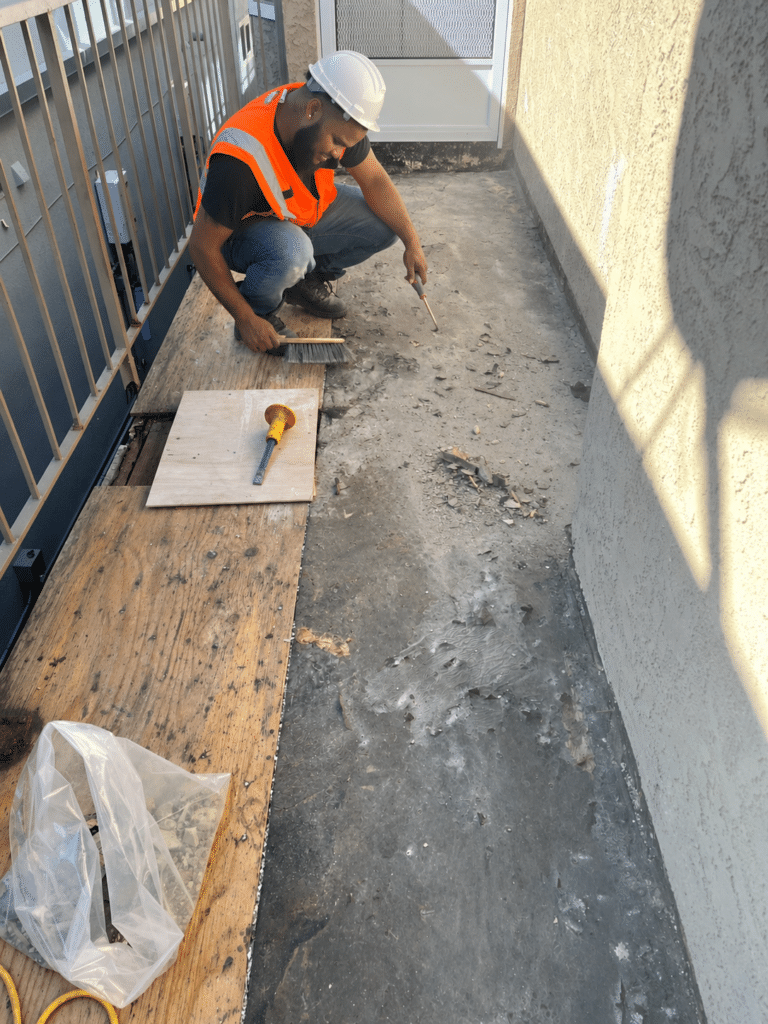
Every project begins with an inspection of the existing deck. We look at the condition of the coating, the plywood, the framing, the drains, and the connections to the building walls and door thresholds.
On re-coating and repair projects, the failed coating is removed so the substrate can be properly evaluated.
Any hidden water damage, soft plywood, or rotted framing must be identified and repaired before new waterproofing goes down.
- Step 2: Plywood Substrate Repair and Preparation
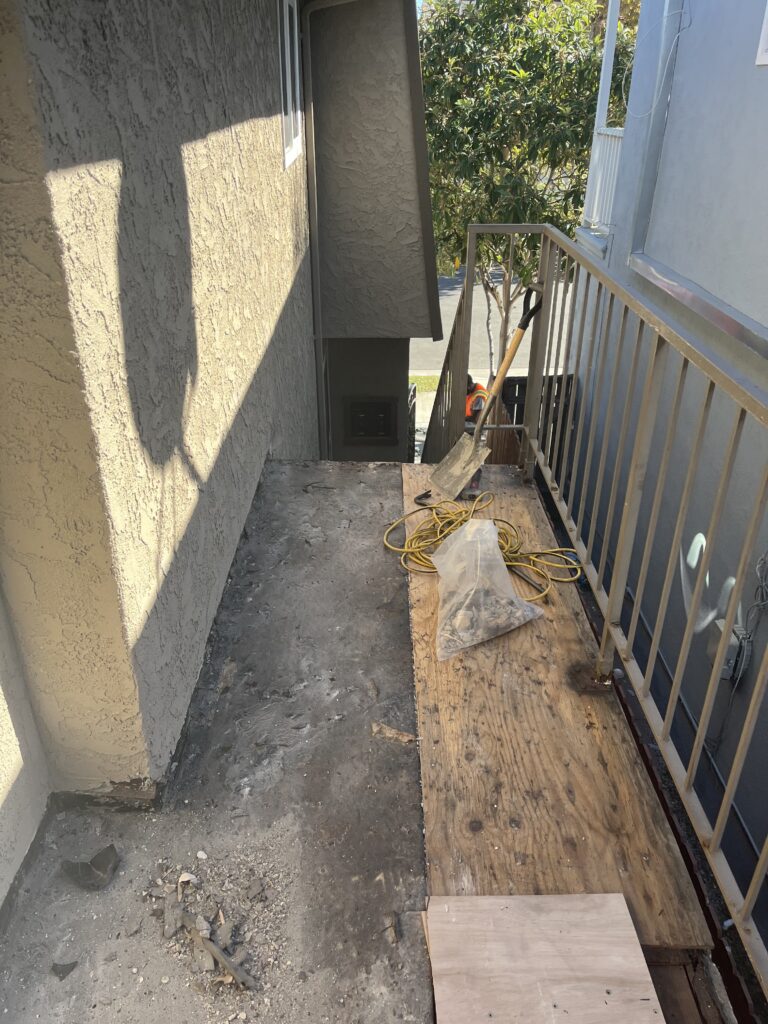
The Pli-Dek system is installed over sound, dry, exterior-grade plywood, typically 3/4 inch thick, that is fastened to code and cleaned of dirt, oil, paint, and other contaminants.
The deck must be stiff enough to limit deflection and should slope about 1/4 inch per foot so water drains away from the building toward drains or scuppers.
Damaged sheathing is replaced and seams are prepared so the finished system has a solid, even base.
- Step 3: Flashing, Drains, and Metal Lath
Before any coating is applied, metal flashing is installed at deck edges, wall transitions, door openings, and penetrations such as railing posts, and drains are set according to Pli-Dek’s details.
Seam paper is placed over the plywood joints, and galvanized expanded metal lath is stapled over the entire deck surface.
The lath reinforces the cementitious layers and helps lock the system to the substrate.
- Step 4: Base Coat Application
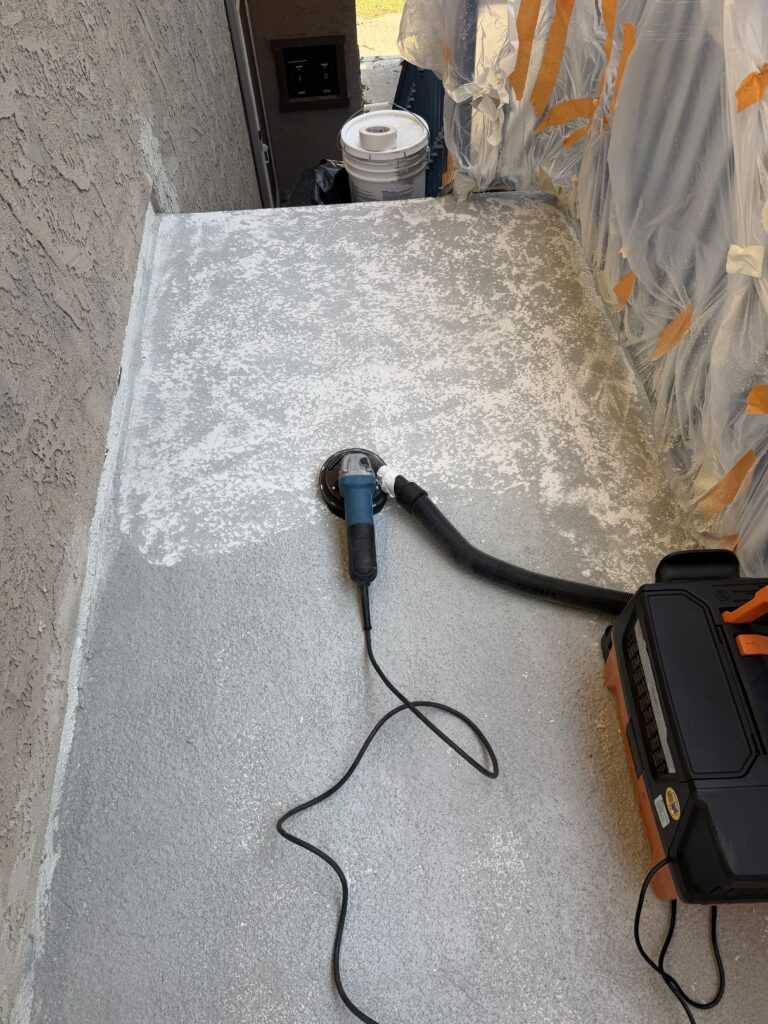
A polymer-modified cementitious base coat is mixed and troweled over the metal lath, filling the voids and fully embedding the lath.
After the base coat cures, rough edges and high spots are ground smooth and the surface is cleaned to prepare it for the next layer.
Depending on the project, an additional screed coat may be applied to create a flatter, more uniform surface.
- Step 5: Fiberglass Reinforcement and Waterproof Resin
Where the specified system calls for it, a fiberglass mat is laid over the deck and up the vertical transitions, and Pli-Dek’s waterproof resin is troweled into the mat until it is fully saturated.
This layer forms a continuous, reinforced waterproof membrane across the deck.
Construction traffic is kept off the surface while the resin cures.
- Step 6: Knockdown Texture Coat
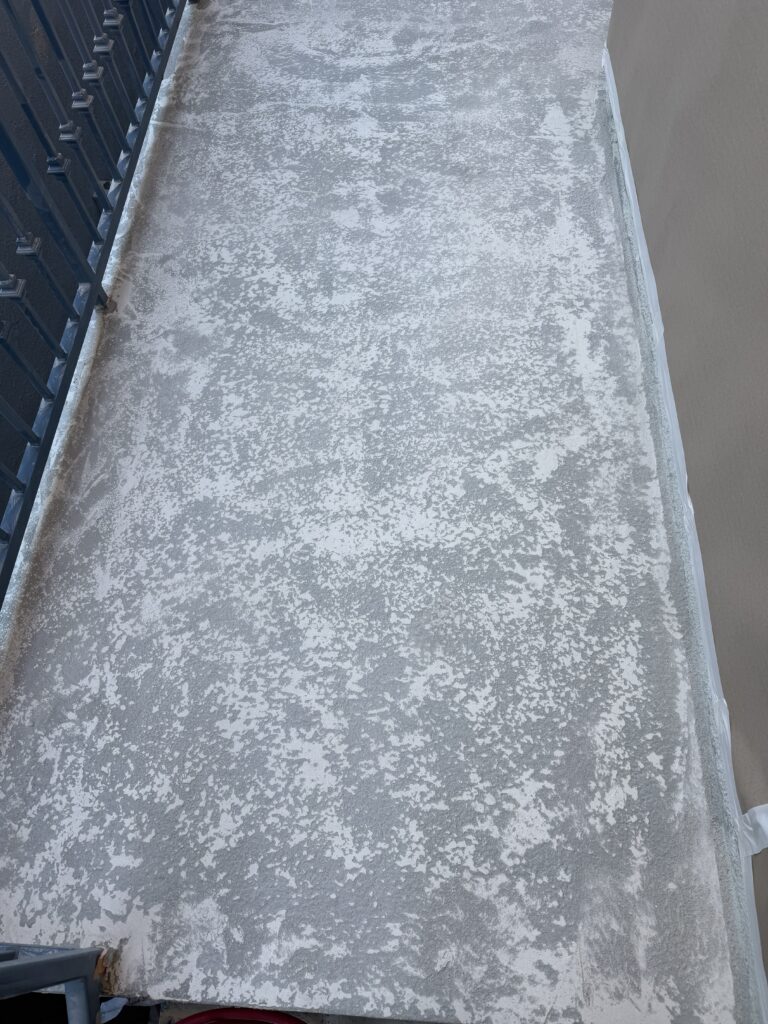
Next, a texture coat is sprayed onto the deck and knocked down with a trowel to create the familiar Pli-Dek knockdown finish.
This texture gives the surface a durable, slip-resistant feel underfoot and a clean, uniform appearance.
Other finish options, such as smooth, sand-broadcast, or decorative tile and stone patterns, are also available.
- Step 7: Sealer Coats and Final Inspection
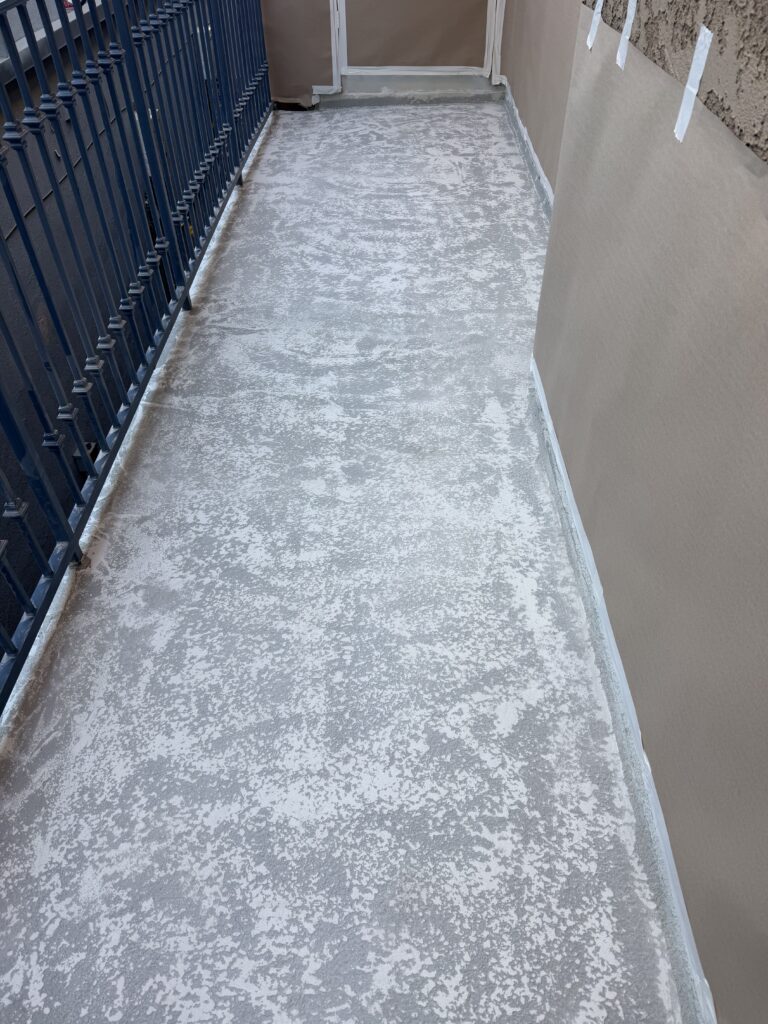
Once the texture coat dries, the deck is sealed with Pli-Dek’s acrylic sealer, often in two coats and in the color of the owner’s choice.
The completed deck is then inspected for coverage, drainage, transitions, and finish quality before it returns to service.
With periodic cleaning and re-sealing, a Pli-Dek deck can protect the structure below for many years.
Where Is Pli-Dek Waterproofing Commonly Used?
Pli-Dek waterproofing is used wherever a wood-framed, plywood deck needs a durable, walkable, waterproof surface.
Apartment and condominium balconies: Elevated balconies are one of the most common Pli-Dek applications, especially on buildings that are subject to SB 721 or SB 326 inspections.
Exterior walkways and breezeways: Multi-unit buildings often rely on open-air corridors that carry heavy daily foot traffic and need a tough, slip-resistant surface.
Roof decks and decks over living space: When a deck sits above a bedroom, garage, or office, reliable waterproofing is essential to protect the interior below.
Stairs and landings: Exterior stair treads and landings can be coated to match adjacent walkways and protect the wood framing.
Single-family homes: Homeowners use Pli-Dek on balconies and second-story decks to stop leaks and refresh worn surfaces.
Commercial and hospitality properties: Hotels, offices, and mixed-use buildings use Pli-Dek on walkways and amenity decks that see constant use.
In every case, the waterproofing system should be selected and detailed for the actual condition of the deck, including its framing, slope, drainage, and connection to the building.
Pli-Dek vs. Other Deck Waterproofing Options
There are several ways to waterproof an exterior deck, and each has its place. Common alternatives include sheet membranes, vinyl decking, and liquid-applied elastomeric or urethane coatings.
Vinyl and sheet membranes can be effective, but seams and edge details must be executed carefully, and some products can be easily damaged by sharp objects or heavy furniture. Elastomeric and urethane coatings are flexible and can be applied quickly, but many are thinner and may wear faster in high-traffic areas.
Pli-Dek’s cementitious, lath-reinforced build-up creates a hard, impact-resistant surface that holds up well to foot traffic, carries Class A and one-hour fire ratings, and can be finished in a variety of textures and colors.
However, no system will perform if it is installed over rotted framing, a deck with poor slope, or missing flashing. The best choice depends on the deck’s use, exposure, structure, and budget, and an experienced contractor should evaluate the options with you.
Important Factors to Consider Before Waterproofing Your Deck
Pli-Dek is a proven system, but successful results depend on careful planning before the first coat goes down.
- Condition of the plywood and framing:
Rotted or damaged wood must be repaired first. Waterproofing should never be used to cover up existing water damage.
- Slope and drainage:
The deck needs positive slope toward drains or scuppers so water does not pond on the surface.
- Flashing and door thresholds:
Most deck leaks start at transitions. Edges, walls, posts, and door openings must be flashed correctly.
- Weather and cure time:
Each layer needs proper temperature and dry conditions to cure, so scheduling around rain and extreme heat matters.
- Certified installation:
Pli-Dek systems must be installed by applicators trained and approved by the manufacturer, following its instructions.
- Ongoing maintenance:
Periodic cleaning, inspection, and re-sealing help extend the life of the deck coating.
Addressing these factors early helps avoid leaks, callbacks, and premature coating failure.
Conclusion
A leaking balcony or worn walkway does not always mean a major reconstruction project. When problems are caught early and the right system is installed correctly, deck waterproofing can stop water intrusion and protect the structure for years to come.
The Pli-Dek waterproof deck system provides a durable, fire-rated, slip-resistant surface for balconies, walkways, stairs, and roof decks by combining metal lath reinforcement, a cementitious base, a waterproof membrane, and a protective finish. It is especially well-suited to wood-framed multifamily buildings throughout Southern California.
However, the success of any waterproofing project depends on more than the product. A thorough inspection, repair of any hidden damage, proper flashing and drainage, and careful installation are all essential.
If your balconies or decks show signs of cracking, peeling, leaks, or water stains, or if an SB 721 or SB 326 inspection has called for repairs, contact SME Engineering and Construction. Our team can inspect your decks, explain your options, and provide a quote for Pli-Dek waterproofing.