

Almost every concrete structure cracks at some point. Shrinkage during curing, temperature swings, settlement, overloading, and corroding reinforcement can all open cracks in walls, slabs, beams, and foundations. Some cracks are only cosmetic. Others let water in, speed up corrosion, or signal a structural problem that needs attention.
Patching over the surface hides a crack, but it does not fix it. A lasting repair fills the crack through its full depth, with the right material.
That is where crack injection comes in, and choosing between epoxy and polyurethane is the most important decision in the process.
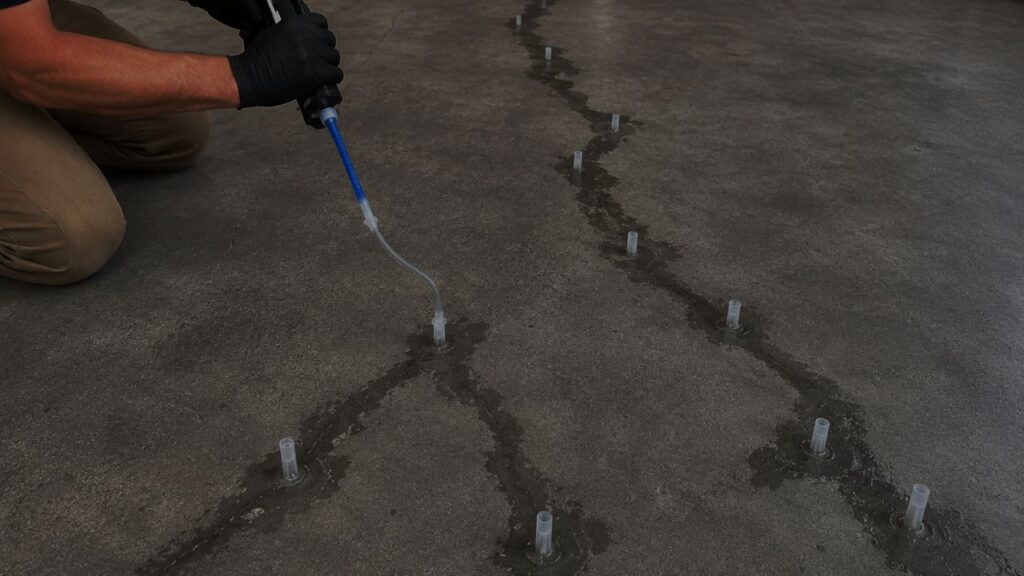
Crack injection pumps a liquid resin into the crack under low pressure until it is filled from front to back. The two most common resins, epoxy and polyurethane, do very different jobs. Epoxy bonds the concrete back together into one piece, while polyurethane forms a flexible, watertight seal.
In this article, we explain how crack injection works, when to use epoxy or polyurethane, where crack injection is commonly used, and what to consider before a repair begins.
Why Do Concrete Cracks Need Professional Repair?
A crack is a symptom, not just a blemish. Before choosing a repair, it is important to understand what caused the crack and whether it is still moving.
Several situations commonly lead property owners to call for crack repair.
- Structural Cracks in Beams, Columns, and Slabs
Cracks in load-bearing elements can reduce stiffness and capacity, and may result from overloading, design or construction deficiencies, or past earthquakes.
When an engineer determines that a crack affects structural performance, injection can help restore continuity across the cracked section.
The underlying cause must also be addressed, or new cracks may form next to the repair.
- Water Leaks Through Walls and Foundations
Cracks in basement walls, parking garages, retaining walls, and other below-grade structures often allow groundwater to seep in.
Leaks can damage finishes, encourage mold, and carry moisture to the reinforcing steel.
Stopping the water is often the first priority.
- Corrosion of Reinforcing Steel
Open cracks give water, oxygen, and chlorides a direct path to the rebar.
As the steel corrodes, it expands, which can widen cracks and cause the concrete to spall.
Sealing cracks early helps slow this damaging cycle.
- Shrinkage and Settlement Cracks
Many cracks form as concrete cures and shrinks, or as a building settles slightly over time.
These cracks are often not structural, but they can still leak or grow.
An evaluation determines whether the crack is stable and which repair is appropriate.
How Does Concrete Crack Injection Work?
Crack injection is a controlled process. The quality of the result depends on careful evaluation, preparation, and injection technique.
- Step 1: Crack Evaluation and Assessment
The process begins with an inspection. We document the crack width, length, location, and pattern, check whether it is leaking, and look for signs that it is still moving.
Horizontal cracks, cracks that are wider at one end, and cracks wider than about a quarter inch can indicate a structural issue that should be reviewed by an engineer.
This step determines whether injection is appropriate and whether epoxy or polyurethane is the right material.
- Step 2: Surface Preparation
The crack face is cleaned of dirt, coatings, efflorescence, and loose material so the surface seal and injection ports can bond properly.
For epoxy, the crack should be as dry as possible, because many epoxies do not bond well to wet concrete.
For polyurethane, moisture in the crack is acceptable and can even help the resin react.
- Step 3: Installing Injection Ports and the Surface Seal
Injection ports are installed along the crack at regular spacing, typically every 8 to 12 inches depending on crack width and wall thickness.
A fast-setting epoxy paste is then applied over the crack between the ports. This surface seal keeps the resin inside the crack so pressure can build and push it deep into the concrete.
The seal must cure fully before injection begins, or it may blow out under pressure.
- Step 4: Injecting the Resin
Starting at the lowest port, the resin is injected slowly at low pressure until it appears at the next port. That port is capped, and the process moves along the crack.
Low-viscosity epoxy flows into very fine cracks and bonds the two faces together. Polyurethane reacts with moisture and expands to fill wider cracks and voids, then stays flexible.
Slow, steady injection is the key to filling the crack completely without leaving voids.
- Step 5: Curing, Port Removal, and Finishing
After the resin cures, the ports are removed and the surface seal is ground or scraped off to leave a clean finish.
The repair is checked for leaks and completeness, and where the project requires it, cores may be taken to verify penetration.
The repaired surface can then be painted or coated to match the surrounding area.
Epoxy vs. Polyurethane: Which Is Right for Your Crack?
Epoxy and polyurethane are both injected the same way, but they are designed for different problems.
- Epoxy Injection
Epoxy is a rigid, high-strength adhesive. Once cured, it bonds the cracked concrete back together and can restore the structural continuity of the element.
Epoxy is usually the right choice when:
- The crack is in a structural member such as a beam, column, slab, or foundation wall
- The crack is dry, or can be dried
- The crack is stable and no longer moving
- Restoring strength is the goal, not just stopping water
- Polyurethane Injection
Polyurethane is a water-reactive resin that expands and remains flexible after it cures. It is the go-to material for stopping leaks.
Polyurethane is usually the right choice when:
- The crack is actively leaking or wet
- Stopping water is the main goal
- The crack may still experience slight movement
- The crack is wide or has voids behind it
In short, epoxy restores strength and polyurethane stops water. Some projects need both, such as a leaking crack in a structural wall that is first sealed against water, then evaluated and strengthened.
Where Is Crack Injection Commonly Used?
Crack injection is used across many types of buildings and infrastructure.
Basement and foundation walls: Poured concrete walls often develop shrinkage cracks that leak after rain. Injection seals them from the inside without excavating around the building.
Parking structures: Garage slabs, beams, and walls crack from loading, temperature changes, and corrosion. Epoxy can restore structural elements, while polyurethane can stop water coming through the deck.
Retaining walls and below-grade structures: Elevator pits, vaults, tunnels, and retaining walls frequently have leaking cracks that need a reliable water stop.
Beams, columns, and slabs: Epoxy injection is commonly used to rebond cracked structural members, sometimes in combination with FRP strengthening.
Post-earthquake repair: After a seismic event, engineers often specify epoxy injection for cracked concrete elements once the structure has been evaluated.
Commercial and industrial floors: Slab cracks can be filled to restore load transfer and prevent the crack edges from breaking down.
In every case, the material and method should be selected for the actual cause and condition of the crack, not just its appearance.
Crack Injection vs. Other Concrete Crack Repair Methods
Injection is not the only way to treat concrete cracks. Routing and sealing widens the crack at the surface and fills it with a flexible sealant, which is common on slabs and horizontal surfaces. Surface patching covers the crack with a repair mortar or coating, but does not fill its full depth. Stitching and structural strengthening, such as steel stitches or FRP, may be needed when a crack reflects a serious capacity problem.
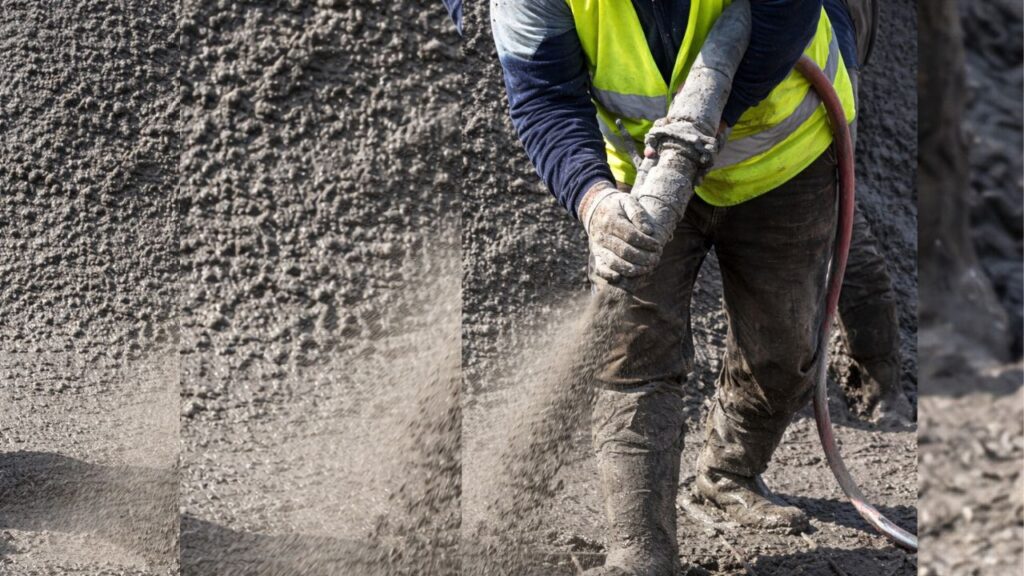
When concrete has spalled or deteriorated over large areas, crack injection alone is not enough. Damaged concrete may need to be removed and the section rebuilt with shotcrete or repair mortar.
What sets injection apart is that it fills the crack through its entire depth rather than treating only the surface. That makes it one of the most effective ways to restore structural bond or permanently stop a leak.
However, injection does not fix the cause of an active crack. If the structure is still settling, overloaded, or corroding, the crack may reopen next to the repair. An engineer should compare the options before a method is selected.
Important Factors to Consider Before Crack Injection
Successful crack repair depends on careful planning before the first port is installed.
- Is the crack still moving?
Rigid epoxy can crack again if movement continues. Active cracks may need monitoring or a flexible solution.
- What caused the crack?
Injection should never be used to hide ongoing settlement, overloading, or corrosion.
- Is it leaking?
Wet or actively leaking cracks usually call for polyurethane, at least as a first step.
- Crack width:
Very fine cracks require low-viscosity resin, while wide cracks may suit expanding polyurethane.
- Structural requirements:
Repairs to load-bearing elements should follow an engineer’s recommendation and applicable standards.
- Installation quality:
Proper surface sealing, injection pressure, and port sequence determine whether the crack is completely filled.
Considering these factors early helps avoid repeat repairs and supports a durable, long-lasting result.
Conclusion
Concrete cracks rarely fix themselves, and the wrong repair can waste money or hide a bigger problem. Crack injection fills a crack through its full depth, providing a permanent repair rather than a surface cover-up.
Epoxy injection restores structural bond and strength in stable, dry cracks, while polyurethane injection creates a flexible, watertight seal for leaking or moving cracks. Choosing the right one depends on what the crack is doing and what the repair needs to achieve.
As with any concrete repair, success depends on more than the resin. A proper evaluation, identification of the cause, correct material selection, and skilled installation are all essential.
If your building has cracked walls, leaking foundations, or damaged structural concrete, contact SME Engineering and Construction. Our team can evaluate your cracks, recommend the right repair, and provide a quote for epoxy or polyurethane crack injection.