
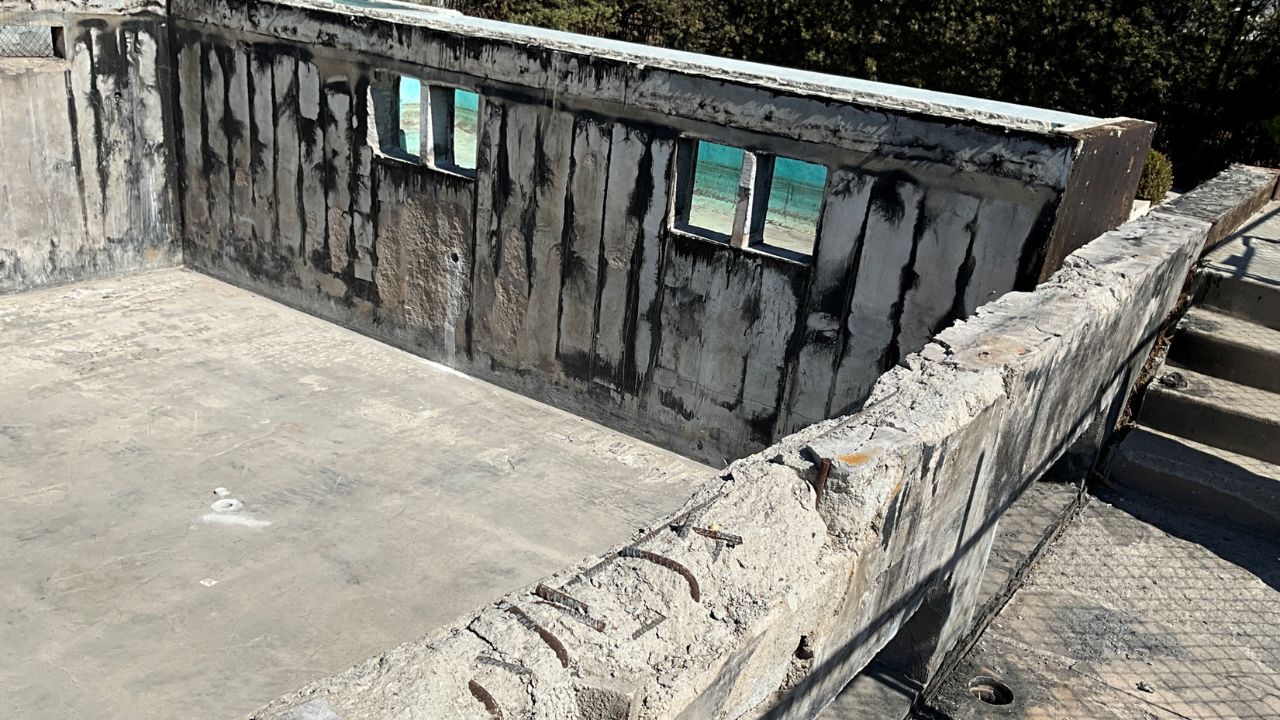
A residential building in Raigad collapsed in 2023, and when investigators went through the wreckage, the story wasn’t complicated. The concrete used in the columns had never been tested for compressive strength before the contractor poured it. Nobody had checked the aggregate. Nobody had verified the cement grade against what was billed. The building went up fast, looked fine for two years, and then it didn’t. This is the pattern behind most structural failures that make the news — not some exotic engineering mystery, but a skipped step that should have taken a few days and a few thousand rupees.
Construction material testing is that skipped step. It’s the process of verifying — in a lab, on-site, or both — that the concrete, steel, soil, bricks, and aggregates going into a structure actually meet the strength, durability, and composition standards the design assumes they will. It sounds procedural, almost boring, until you realize it’s the only thing standing between a structural engineer’s calculations on paper and what actually holds a building up.
What Construction Material Testing Actually Covers
People often think “material testing” means one test at one stage. It’s really a sequence of checks spread across the entire build, each one answering a different question.
Soil testing
Soil testing comes first, before a single brick is laid. A geotechnical investigation tells you the bearing capacity of the ground — how much load it can take before it settles or shifts. Skip this, and you’re designing a foundation for soil conditions that may not exist. Expansive black cotton soils, common across large parts of Maharashtra and Madhya Pradesh, swell when wet and shrink when dry; a foundation designed without accounting for that movement will crack over a few monsoon cycles, not decades.
Concrete testing
Concrete testing is the one most people have at least heard of, usually through the slump test and the cube test. The slump test, done on fresh concrete at the site, measures workability — whether the mix has the right consistency to be placed and compacted properly. The cube test is the real verdict: concrete cubes cast on-site are cured for 7 and 28 days, then crushed in a compression testing machine to check whether the mix actually achieves its design strength — M20, M25, M30, and so on. A 28-day cube result below the specified grade is not a paperwork problem. It means the structural design’s core assumption about concrete strength is wrong.
Steel testing
Steel testing covers reinforcement bars — checking yield strength, ultimate tensile strength, elongation, and bend/rebend properties. Reinforcement is what gives concrete its ability to handle tensile stress; concrete is strong in compression and weak in tension, so if the steel underperforms, the whole logic of reinforced concrete construction breaks down, no matter how good the concrete itself is.
Aggregate testing
Aggregate testing checks the sand, gravel, and crushed stone that make up the bulk of concrete. Tests here look at gradation (the size distribution of particles), the presence of silt or organic impurities, and the aggregate’s own crushing and impact resistance. Dirty or poorly graded aggregate weakens concrete even when the cement content is correct — a fact that’s easy to miss because the concrete still looks normal when it’s poured.
Cement testing
Cement testing verifies setting time, fineness, and soundness — whether the cement will expand abnormally after hardening, which happens when it contains too much free lime or magnesia. A bag of cement that’s been sitting in a damp warehouse for eight months can pass a visual check and still fail a soundness test.
Brick and masonry unit testing
Brick and masonry unit testing checks compressive strength, water absorption, and efflorescence — the powdery salt deposits that appear on brick surfaces and eventually degrade plaster and paint from within.
Why This Isn't Optional, Even When It Feels Like It Slows You Down
Every one of these tests adds time to a project schedule that’s usually already tight, and every one of them costs money that a contractor working on thin margins would rather not spend. That’s the real reason material testing gets skipped or shortcuts on smaller projects — not ignorance, but pressure. Understanding why it matters anyway comes down to three things: safety, cost, and legal exposure.
Structural Safety Isn't Negotiable
A structural design is a set of assumptions translated into numbers — this column can carry this load because the concrete will reach this strength and the steel will yield at this stress. Every one of those numbers depends on the materials actually performing as specified. When they don’t, the safety margin the engineer built in starts eating into the actual capacity of the structure, sometimes all the way to zero.
This isn’t a one-in-a-thousand risk. Substandard construction material is one of the most frequently cited factors in structural failure investigations across India, alongside design errors and poor supervision. Material testing is the mechanism that catches the problem while it’s still just a batch of concrete or a bundle of rebar — before it’s inside a wall where the only way to find out something’s wrong is for the wall to fail.
It's Cheaper to Test Than to Fix
The economics here are lopsided in a way that should make the decision easy. A standard concrete cube test costs a small fraction of a percent of the value of the concrete pour it’s checking. Retrofitting a structure that’s found to have understrength concrete — jacketing columns, adding supplementary reinforcement, or in the worst cases, demolishing and rebuilding a section — costs orders of magnitude more, and that’s before accounting for project delays, legal disputes, and reputational damage to the contractor and developer.
There’s also the slower, quieter cost: durability. Concrete with the wrong water-cement ratio or poor curing might hit its 28-day strength target and still be more porous than it should be, letting in moisture and chlorides that corrode the reinforcement over 10 to 15 years instead of the 50-plus years the structure was designed for. Testing at the right stages — including checks on water-cement ratio and curing conditions, not just the final cube crush — catches this long-term risk that a purely visual inspection never would.
Regulatory and Contractual Accountability
In India, construction material testing isn’t just good practice — it’s tied directly into the regulatory framework. The Bureau of Indian Standards (BIS) sets the specifications that materials are tested against: IS 456 for plain and reinforced concrete, IS 383 for coarse and fine aggregates, IS 1786 for high-strength deformed steel bars, among others. Building approval processes, particularly for structures that require structural stability certificates, typically require documented test results as part of the submission. A contractor who can’t produce cube test reports or steel test certificates when asked isn’t just facing an awkward conversation — they’re potentially in violation of the building code the project was approved under.
This documentation matters again later, in a way people don’t think about until they need it: insurance claims, resale due diligence, and any post-incident investigation all look for material test records. A file of test certificates isn’t paperwork for its own sake — it’s the evidence trail that a building was constructed the way it was designed to be.
Where Testing Fits Into the Construction Timeline
Material testing works best woven through the project, not bolted on as a final inspection. A rough sequence looks like this: geotechnical soil investigation before foundation design is finalized; aggregate and cement testing before the concrete mix design is approved; slump tests on every batch of concrete as it’s poured; cube casting at each pour, with results at 7 days giving an early warning and 28 days giving the final verdict; steel testing on each lot of reinforcement received at site, cross-checked against mill test certificates from the supplier; and periodic testing of bricks or blocks as masonry work proceeds.
Third-party testing — where an independent, NABL-accredited lab does the testing rather than the contractor’s own site lab — adds a layer of credibility that matters most on larger or publicly funded projects, where conflicts of interest around self-reported results are an obvious concern.

What Genuine Testing Looks Like vs. What Gets Passed Off As Testing
This is where a lot of smaller projects quietly fail, and it’s worth being blunt about it: not all “testing” on Indian construction sites is genuine. A cube test where the cubes are pulled from a well-mixed, well-vibrated sample poured specifically for testing is genuine. A cube test where someone scrapes together leftover concrete from the mixer drum after the main pour is not — that sample often doesn’t represent what actually went into the structural member. Curing matters just as much as casting; cubes that sit in the sun instead of a water curing tank for 28 days will show a strength result that has little to do with reality.
The other shortcut to watch for is testing frequency. IS 456 specifies minimum sampling rates based on quantity of concrete — for smaller quantities, at least one sample for every 5 cubic metres or part thereof, per day, with more frequent sampling required as volumes grow. A site that casts one set of cubes for an entire multi-day pour, then applies that single result to everything, isn’t really testing the concrete that went into the building — it’s testing a sample and hoping the rest matches.
For anyone commissioning construction — a homeowner, a small developer, a facilities manager overseeing renovation — the practical takeaway is to ask for the actual test certificates, not just a verbal assurance that “testing was done.” A genuine report will show the lab name and accreditation, the date of casting and testing, the specific grade of concrete or structural element it corresponds to, and the numerical result against the required benchmark. If a contractor can’t produce that level of detail, the testing likely wasn’t done to the standard the project needed.
Conclusion
Construction material testing is the difference between a structure that’s been engineered on paper and one that’s actually been built to that engineering. It’s not a bureaucratic checkbox — it’s the only way to confirm, with data instead of assumptions, that the concrete will carry the load, the steel will hold under tension, and the ground beneath it all won’t shift under the weight. On any project where the outcome matters — and structural safety always does — the question isn’t whether testing is worth the time and cost. It’s whether you can afford to find out the hard way that it wasn’t done properly.
If you’re evaluating a contractor or a build, the simplest gut check is this: ask to see the cube test reports and steel certificates before the walls go up, not after. A contractor with nothing to hide will have them ready.