
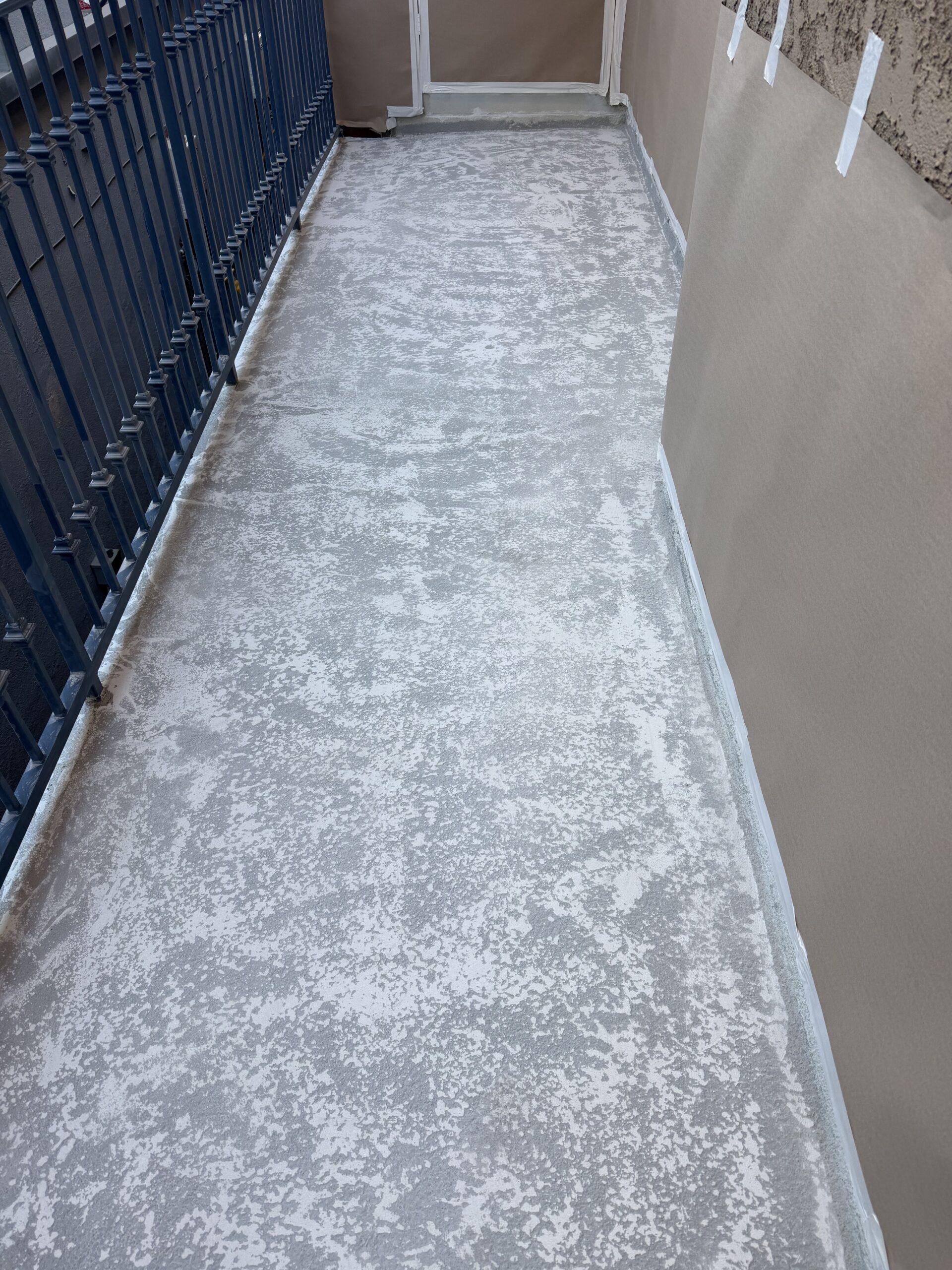
Balconies, decks, and exterior walkways are some of the hardest-working parts of a building. They are exposed to sun, rain, and daily foot traffic, and in most California apartment and condominium buildings they are framed with wood. When water gets past the waterproofing, the damage often happens out of sight, inside the joists and plywood that hold the balcony up.
A balcony can look fine from the outside and still have serious rot underneath. That is why balcony problems should be investigated and repaired properly, not simply painted over.
Professional balcony repair restores both the structure and the waterproofing, so the balcony is safe to use and protected for years to come.
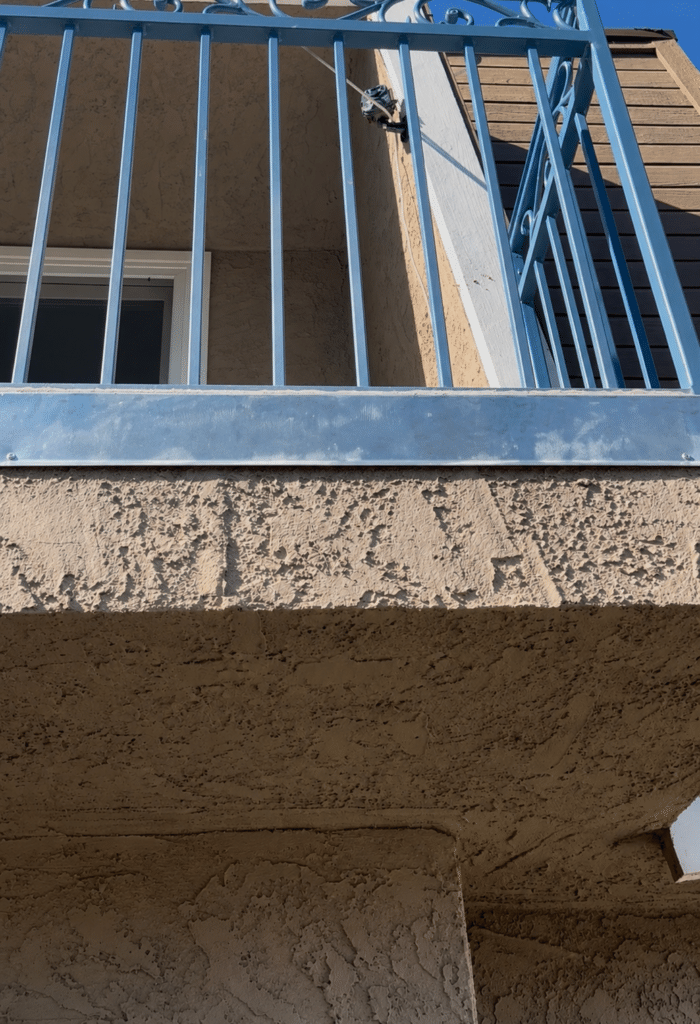
California’s balcony inspection laws have also made balcony repair a priority for many property owners. Inspections under SB 721 and SB 326 often uncover damaged framing, failed coatings, and loose railings that must be addressed.
In this article, we explain why balconies need repair, walk through each step of the balcony repair process, cover where repairs are commonly needed, and share what to consider before you start.
Why Do Balconies Need Repair?
Most balcony failures start with water. Once moisture reaches the wood framing, decay can progress for years before it becomes visible.
Several situations commonly lead property owners to repair a balcony.
- Water Intrusion and Wood Rot
Cracked coatings, failed flashing, and poor drainage allow water into the plywood and joists.
Trapped moisture leads to dry rot, fungal decay, and corroded fasteners, which steadily weaken the balcony.
Learn more in our guide to wood rot in California apartment balconies.
- Failed Waterproofing and Coatings
Every deck coating eventually wears out from sun, foot traffic, and building movement.
Peeling, cracking, blistering, and soft spots are common signs that the waterproofing is no longer protecting the structure.
Replacing the waterproofing at the right time prevents much larger framing repairs.
- Loose Railings and Corroded Connections
Guardrails, posts, and metal connectors can loosen or rust over time, especially where water collects around their bases.
A railing that moves or a connector that has corroded is a safety hazard that needs prompt attention.
Repairs often include re-anchoring posts and replacing damaged hardware.
- Inspection Findings Under SB 721 and SB 326
California requires periodic inspections of balconies, decks, walkways, and stairs that are more than six feet above the ground and supported by wood framing.
When an inspection identifies damage or unsafe conditions, the owner must arrange repairs.
See our SB 326 balcony inspection guide for details on condominium requirements.
How Does the Balcony Repair Process Work?
Balcony repair is more than replacing what you can see. A lasting repair addresses the structure, the drainage, and the waterproofing together.
Here is how a typical balcony repair project comes together.
- Step 1: Inspection and Damage Assessment
Every project starts with a close look at the balcony. We check the coating, railings, drainage, and the condition of the framing below, often opening the surface to see the plywood and joists directly.
Moisture readings and exploratory openings help reveal hidden decay that a visual inspection alone can miss.
This step defines the true scope of the repair before any work begins.
- Step 2: Engineering Review, Repair Plan, and Permits
Based on the inspection, a repair plan is developed that specifies which framing members, sheathing, connectors, and railings need to be repaired or replaced.
Structural repairs typically require engineering details and a building permit.
If a balcony is unsafe, it should be closed to use and shored until repairs are complete.
- Step 3: Removing Damaged Materials and Repairing the Framing
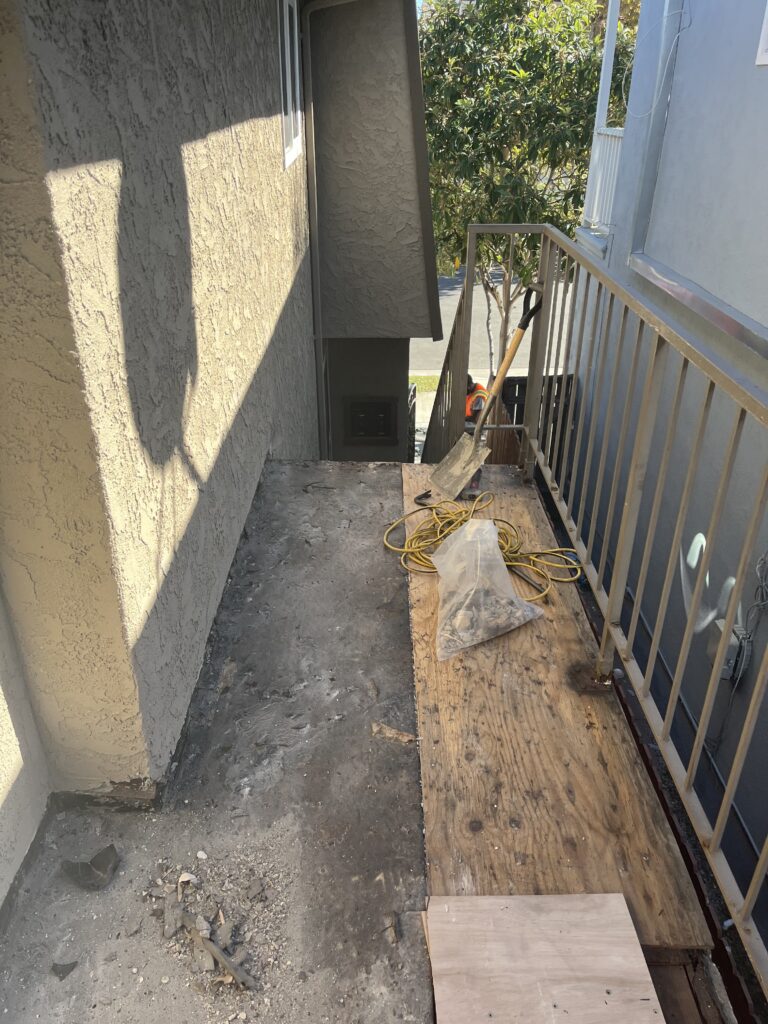
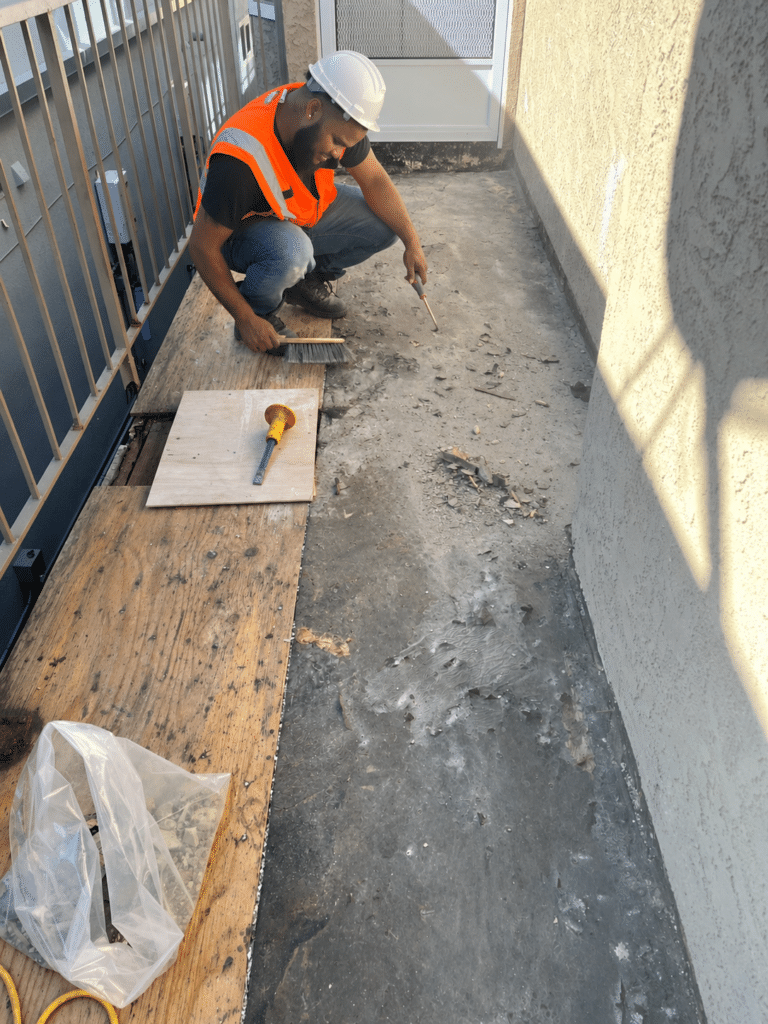
The failed coating and damaged plywood are removed to expose the structure. Rotted joists, beams, and ledgers are replaced or reinforced, and corroded connectors are replaced with new hardware.
New exterior-grade sheathing is installed over sound framing, with the deck sloped so water drains away from the building.
This is the most important step, because a new waterproofing system is only as good as the structure beneath it.
- Step 4: Flashing, Drainage, and Slope Correction
Metal flashing is installed at the deck edges, wall connections, and door thresholds, which are the most common sources of balcony leaks.
Drains and scuppers are installed or corrected so water leaves the balcony quickly instead of ponding.
Proper flashing and slope are what keep water out of the framing over the long term.
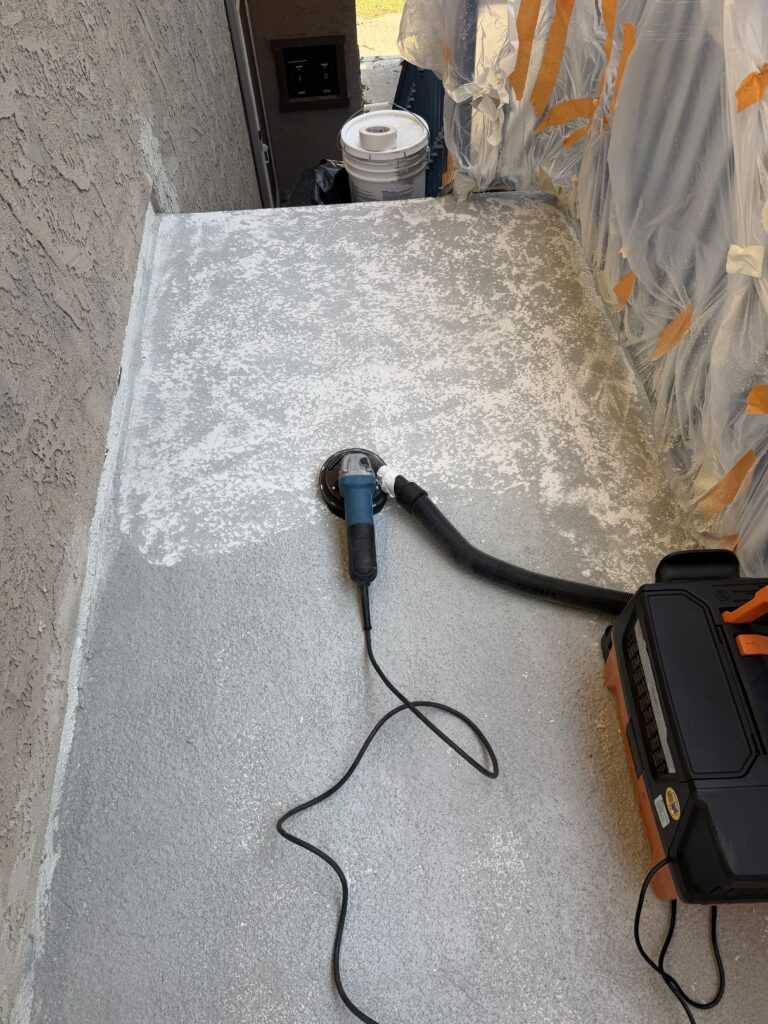
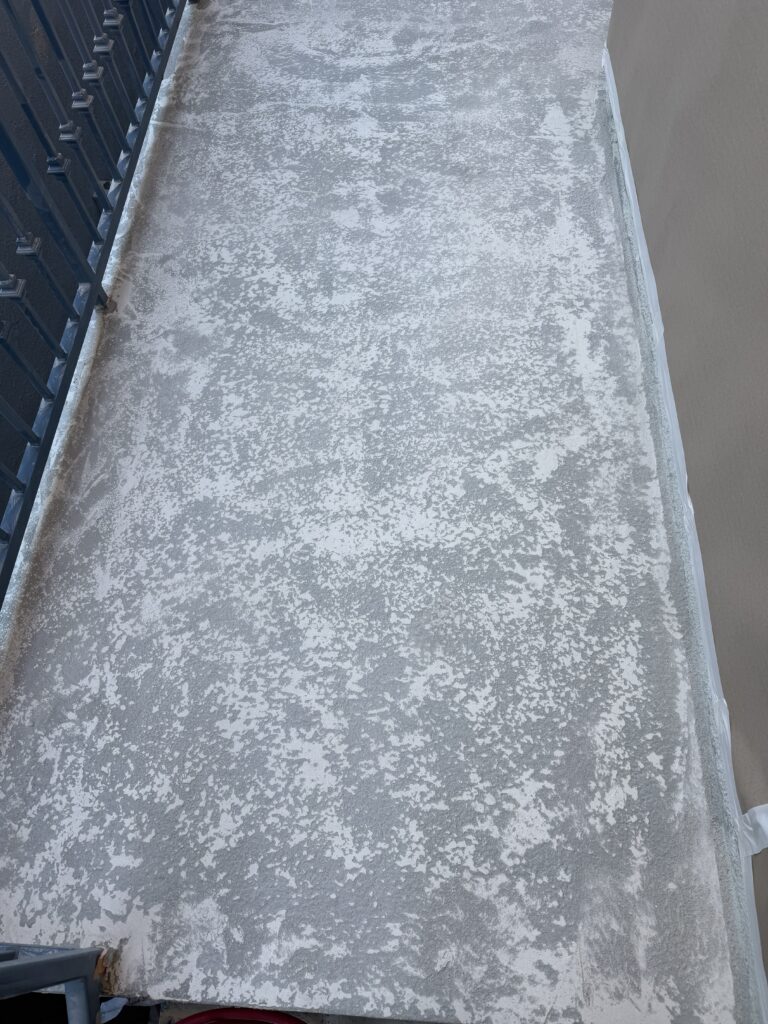
- Step 5: Installing the Waterproofing System
Once the structure and flashing are complete, a waterproof deck coating system is installed. At SME, we use the Pli-Dek waterproof deck system, which is built up in layers over galvanized metal lath.
The base coat, reinforcing layers, and texture coats are applied with proper curing time between each layer.
The result is a durable, slip-resistant, fire-rated walking surface that protects the structure below.
- Step 6: Finish Coat, Railings, and Final Inspection
The deck receives its finish texture and sealer coats, and railings are reinstalled or replaced and securely anchored.
The completed balcony is inspected for drainage, coating coverage, railing strength, and overall workmanship.
Once the work is signed off, the balcony can safely return to use.
Where Is Balcony Repair Commonly Needed?
Balcony repair is needed across many types of properties, especially wood-framed buildings throughout Southern California.
Apartment buildings: Multifamily rental properties with three or more units must have their elevated balconies, decks, and stairs inspected under SB 721, and inspection findings often lead to repairs.
Condominiums and HOAs: Condominium associations are subject to SB 326 inspections and are responsible for maintaining balconies and walkways that serve the community.
Exterior walkways and breezeways: Open-air corridors carry heavy daily foot traffic and often show wear and water damage first.
Exterior stairs and landings: Wood-framed stairs and landings are exposed to the same moisture problems as balconies and are covered by the same inspection laws.
Single-family homes: Second-story decks and balconies, especially those over living space, need sound framing and reliable waterproofing to prevent leaks and decay.
Commercial and mixed-use buildings: Hotels, offices, and mixed-use properties rely on safe, well-maintained balconies and walkways for tenants and guests.
In every case, the repair should be based on the actual condition of the structure, not just what is visible on the surface.
Balcony Repair vs. Full Balcony Replacement
Not every damaged balcony needs to be completely rebuilt. When decay is limited to a few joists or sections of plywood, targeted repairs combined with new waterproofing can restore the balcony at a lower cost and with less disruption.
When damage is widespread, when the ledger connection to the building has deteriorated, or when the balcony was poorly designed in the first place, full replacement may be the safer and more economical long-term choice.
Simply re-coating a balcony without checking the framing is the riskiest option of all. A fresh coating can hide active rot and allow damage to continue unseen.
A professional inspection and engineering review is the best way to decide between repair and replacement. Learn more about the warning signs of balcony damage to watch for.
Important Factors to Consider Before Balcony Repair
Balcony repair projects go more smoothly when these factors are considered from the start.
- Extent of hidden damage:
The true scope often becomes clear only after the surface is opened, so budgets and schedules should allow for it.
- Permits and engineering:
Structural repairs typically require engineered details, permits, and city inspections.
- Inspection timelines:
Repairs identified in SB 721 or SB 326 reports should be completed promptly, especially items flagged as unsafe.
- Resident access and safety:
Unsafe balconies should be closed and shored, and residents need clear notice about access during work.
- Waterproofing system selection:
The coating system should suit the deck’s use, exposure, and fire-rating requirements.
- Ongoing maintenance:
Regular cleaning, inspection, and re-sealing help extend the life of the repair.
Planning for these factors early helps avoid surprises and keeps the project on schedule.
Conclusion
A balcony that leaks, sags, or has a loose railing is more than a cosmetic problem. Water damage inside the framing can quietly weaken a balcony until it becomes unsafe.
Professional balcony repair restores the structure, corrects drainage and flashing, and installs a durable waterproofing system, giving residents a balcony that is safe, watertight, and built to last. It is especially important for wood-framed apartment and condominium buildings throughout California.
However, the success of any balcony repair depends on a thorough inspection, a sound repair plan, quality materials, and careful installation.
If your balconies show signs of damage, or if an SB 721 or SB 326 inspection has called for repairs, contact SME Engineering and Construction. Our team can inspect your balconies, explain your options, and provide a quote for balcony repair and waterproofing.